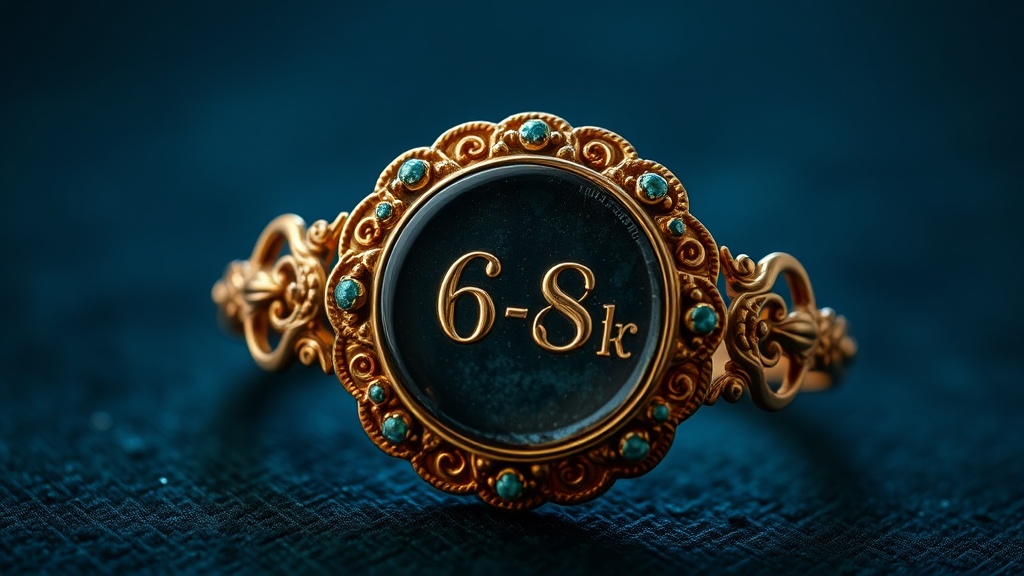
Spotting Hallmarks on Antique Gold Jewelry

Quick Tip
Always use a jeweler's loupe to inspect hallmarks, as these tiny marks are the most reliable indicators of gold purity.
Many collectors assume that a single stamp on a ring guarantees it is high-karat gold, but that's a mistake. A hallmark doesn't just tell you the metal purity; it tells you the history, the maker, and often the origin of the piece. Understanding these tiny engravings is the only way to distinguish between a solid gold heirloom and a gold-plated costume piece.
What Do Gold Hallmarks Actually Mean?
Gold hallmarks are standardized marks used to certify the purity and origin of precious metals. While a "14K" or "585" stamp indicates the gold content, other symbols might indicate the maker's mark or even the country of origin. For example, a piece of jewelry might have a maker's mark from a specific jeweler like Tiffany & Co., which adds significant value beyond the metal itself.
It's worth noting that not all marks are created equal. Some are strictly for metal content, while others are much more complex. You'll often see different types of stamps depending on the era of the piece.
- Karat Marks: These indicate the gold purity (e.g., 10K, 14K, 18K).
- Decimal Marks: Common in Europe, these show fineness (e.g., 750 for 18K gold).
- Maker's Marks: A unique symbol or name representing the person or company that crafted the item.
- Assay Marks: These signify that the metal has been tested and verified by an official authority.
How Do I Identify Real Gold Hallmarks?
You can identify real gold hallmarks by using a jeweler's loupe to inspect the clarity and precision of the engraving. Real hallmarks are struck into the metal, creating a slight indentation, whereas fake or "acid-etched" marks often look shallow or blurry. If the mark looks like it's just printed on the surface, be skeptical.
I've seen many pieces where the "gold" stamp is actually just a scratch. If you're looking at an Art Deco era piece, the hallmark might be incredibly small or even worn away by time. This is why a high-quality magnification tool is your best friend. Don't rely on your naked eye alone—it's simply not precise enough.
| Stamp Type | Common Example | What it Tells You |
|---|---|---|
| Purity | 585 | 58.5% Gold (14K) |
| Purity | 750 | 75% Gold (18K) |
| Origin | Lion Passant | British Sterling Silver (not gold, but a common hallmark) |
Why Are Some Hallmarks Harder to See?
Hallmarks become harder to see due to physical wear, chemical oxidation, or the sheer scale of the jewelry piece. Small items like earring posts or thin wedding bands often have much more fragile or obscured markings than heavy necklaces. If you can't see a mark, it doesn't always mean the piece is fake—it might just be a victim of time.
If you are working with highly delicate or ancient pieces, you might want to look into strategies for vintage jewelry upkeep to ensure you aren't accidentally damaging the surface while inspecting it. Use a loupe, stay patient, and never use harsh chemicals to try and "reveal" a hidden mark.