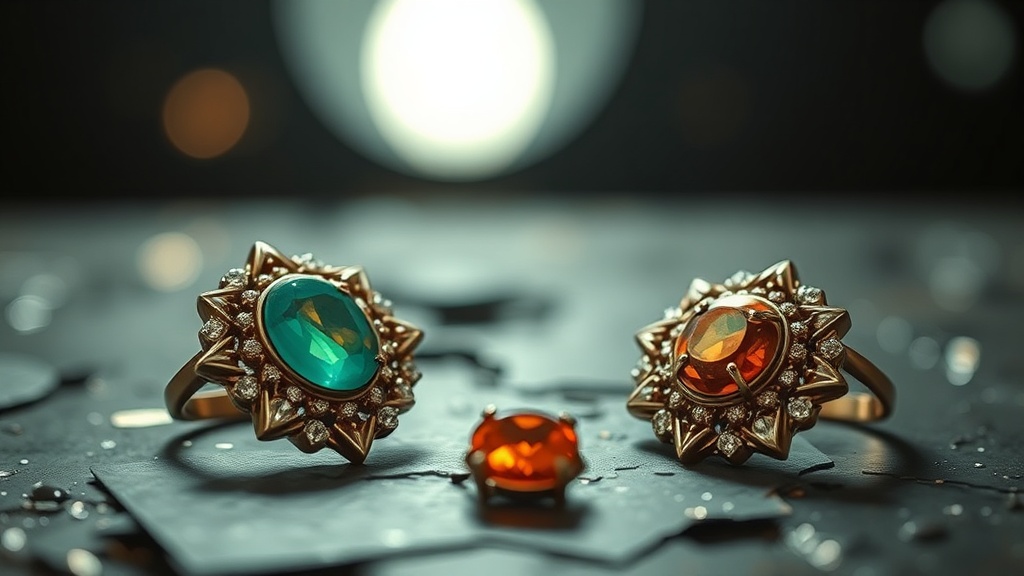
Identifying Genuine Mid-Century Brutalist Jewelry

The Myth of the "Cheap" Brutalist Piece
Many people assume that if a piece of jewelry looks rough, jagged, or "unrefined," it's simply a low-quality fashion accessory from the 1960s. This is a mistake. While mass-produced costume jewelry often mimicked the look of the Brutalist movement, true Brutalist jewelry is a distinct, high-level sculptural form. Understanding the difference between a cheap imitation and a genuine artisan piece is the difference between owning a piece of wearable art and a piece of junk. This guide covers the hallmarks of genuine craftsmanship, the materials used during the mid-century era, and how to spot the difference between a designer-made statement and a factory-made imitation.
Brutalist jewelry isn't about being pretty in a traditional sense; it's about texture, weight, and a certain "organized chaos." It emerged as a reaction against the polished perfection of the Art Deco era. Instead of smooth surfaces, you see craters, molten textures, and asymmetrical shapes. It's a movement that celebrates the raw power of metal. If you're looking to collect this style, you need to look past the surface level and examine the structural integrity of the piece.
What Materials Define Real Brutalist Jewelry?
The first step in identification is looking at the metal. Most high-end Brutalist pieces from the 1950s through the 1970s were crafted in sterling silver, gold, or high-quality copper. The texture is often achieved through techniques like sand casting or torch-work, which creates that characteristic "melted" or "eroded" look. You'll often see silver that looks like it has been beaten or scorched.
When looking for quality, check the weight. Genuine mid-century pieces often have a substantial heft. A light, flimsy piece is a red flag. If the piece is gold-plated, the plating should be thick enough that you don't see much wear through the "cratered" texture. If you see a bright, shiny yellow color peeking through a rough texture, it's likely a thin wash over a base metal. High-quality Brutalist work might also incorporate semi-precious stones like quartz, moonstone, or rough-cut jade, often set in ways that look organic rather than formal. For more on metal purity standards, you can check the Gemological Institute of America for technical details on metal-gemstone relationships.
How Can I Spot an Authentic Designer Signature?
In the world of mid-century collecting, the signature is your best friend. While many pieces were maker-unbranded, the top-tier designers left marks. Look for signatures from artists like Alexander Calder (though his jewelry is rare and highly sought after) or more common but still significant designers like Georg Jensen or various independent American sculptors. A signature might be stamped into the metal or even etched into the texture itself. If a piece claims to be a specific designer' but lacks any mark or has a generic "Made in..." stamp, proceed with caution.
It's important to note that not all Brutalist-style jewelry is signed. Many talented independent jewelers created incredible work that never bore a formal hallmark. In these cases, you have to rely on the quality of the construction. Look at the clasp. A high-quality vintage piece will have a sturdy, functional clasp—whether it's a box clasp or a lobster claw—that doesn't feel loose or fragile. A flimsy, mass-produced clasp is a sign of a piece made for the high-street fashion market rather than a gallery or boutique.
Where Does the Brutalist Movement Come From?
To understand why these pieces look the way they do, you have to understand the architecture of the time. The term "Brutalist" comes from the French béton brut (raw concrete), a term used in architecture. Just as architects were using heavy, textured concrete to create striking buildings, jewelers were using metal to create heavy, textured adornments. This wasn't just a trend; it was a philosophy. The goal was to celebrate the imperfections of the material.
This movement was a way to rebel against the industrialization of the mid-century. As machines became better at making perfectly smooth, identical items, artists pushed back by making things that looked hand-forven and even slightly "broken." This is why you'll see many pieces that look asymmetrical or even slightly "unfinished." To the untrained eye, it looks like a mistake. To a collector, it's the entire point. If you're interested in the history of these design movements, the Metropolitan Museum of Art archives offer incredible context on how art movements influence decorative arts.
- Texture: Look for depth. Is it just a pattern stamped on, or is the metal actually sculpted?
- Asymmetry: True Brutalist pieces are rarely symmetrical.
- Metal Quality: Check for sterling silver or gold markings.
- Construction: The piece should feel solid and intentional, not fragile.
Collecting this style requires a keen eye for detail. You aren't just looking for a piece of jewelry; you're looking for a piece of sculpted metal that happens to be wearable. Don't be afraid of the "ugly" parts—the rugged, the jagged, and the uneven. That's where the real value lives.