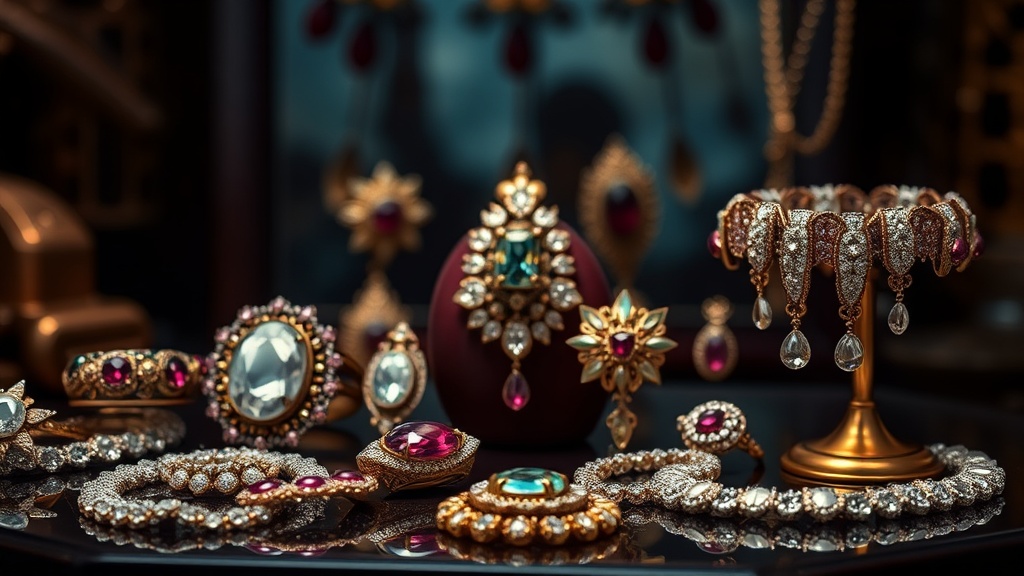
How to Identify High-Quality Vintage Costume Jewelry

Identifying Quality in the Costume Jewelry Market
You're browsing a local antique fair in the middle of a crisp Edmonton autumn, and you spot a chunky, gold-toned brooch. It looks substantial—heavy enough to feel like real gold, but the clasp feels slightly different from your fine jewelry. This is the moment every collector faces: is this a high-quality piece of vintage costume jewelry, or is it a cheap, plated trinket that will lose its luster by next week? Understanding the distinction between high-end costume and low-end costume jewelry is what separates a savvy collector from someone just buying shiny things.
High-quality vintage costume jewelry—often referred to as "fine costume"—was produced with much more attention to detail than the mass-produced pieces you see in modern fast-fashion retailers. These pieces often used better base metals, more sophisticated plating techniques, and higher-grade glass or semi-precious stones. When you're out hunting, you aren't just looking for a brand name; you're looking for weight, texture, and the way the light interacts with the materials. It's a tactile process that requires a keen eye and a bit of skepticism.
How can you tell if vintage jewelry is high quality?
The first thing to check is the weight and the base metal. While fine jewelry is solid gold or silver, high-end costume jewelry often uses heavy brass or even copper. If a piece feels light and hollow, it's likely a low-grade production. However, weight alone isn't a guarantee. A heavy brass brooch can still have thin, flaky plating. You want to look for a piece that has a certain "heft" to it. If you can, look at the back of the piece (the reverse side). A high-quality vintage piece often has a smooth, finished back, rather than a jagged, rough metal surface. This shows a level of craftsmanship that suggests it wasn't just tossed into a mold and stripped of its imperfections.
Another way to gauge quality is through the way the stones are set. In cheap costume jewelry, stones are often just glued in (the dreaded "glued-in stone" problem). In high-quality vintage pieces, you'll see actual metal prongs or bezel settings. If you see a tiny bit of metal wrapping around the edge of a rhinestone or a glass bead, that's a great sign. It means the stone is secure and the piece was designed to last. You can research common setting styles through resources like the Victoria and Albert Museum to see how historical settings evolved from fine to costume jewelry.
What are the signs of high-end plating?
Plating is where many vintage pieces fail. You'll often see "vermeil" or heavy gold-filled marks on higher-quality items. If you see a piece that is starting to show wear, look closely at the edges. In low-quality plating, the metal wears away to reveal a dull, reddish copper color. In higher-end vintage pieces, the plating is often much thicker and more resilient. If you're looking at a piece of "gold-toned" jewelry, check for the presence of hallmarks. While many costume pieces don't have them, high-end manufacturers like Trifari or Monet often included marks that indicate a higher level of production value.
Does the type of stone matter for value?
While we aren't talking about diamonds or rubies here, the quality of the "simulated" stone is a huge indicator of how much a piece is worth to a collector. High-quality vintage jewelry often uses high-lead content glass (sometimes called "rhinestones") which has a much higher refractive index than cheap plastic or acrylic. This means the stone will sparkle even in low light. If the "stone" looks dull, cloudy, or has visible scratches on the surface, it's likely a lower-grade material. High-end pieces often used "paste"—a type of lead glass that mimics the brilliance of a diamond—to provide that extra bit of fire. You can see examples of how different materials react to light in various historical eras through the Metropolitan Museum of Art archives.
When you are evaluating a piece, don't forget to look at the movement of the piece. Does the clasp work smoothly? Do the hinges on a bracelet move without sticking? A piece of jewelry that feels "clunky" or has parts that fall off easily is rarely a high-quality vintage find. Even if the aesthetic is beautiful, a lack of mechanical integrity usually points to a lower tier of production. A collector wants a piece that can be worn and enjoyed, not something that requires constant repair.
One final tip: pay attention to the patina. Some vintage pieces, especially those made of silver-plate or brass, develop a beautiful, aged look over decades. A slight darkening in the recessed areas of a design can actually highlight the detail and give the piece character. If a piece looks too perfect—almost like it was made yesterday—be suspicious. It might be a modern reproduction rather than a true vintage treasure. The goal is to find that sweet spot where history meets high-quality craftsmanship.
| Feature | Low-Quality Costume | High-Quality Vintage |
|---|---|---|
| Stone Setting | Glued-in or flimsy | Metal prongs or bezels |
| Metal Feel | Light, hollow, thin | Hefty, substantial |
| Back of Piece | Rough, uneven metal | Smooth, finished back |