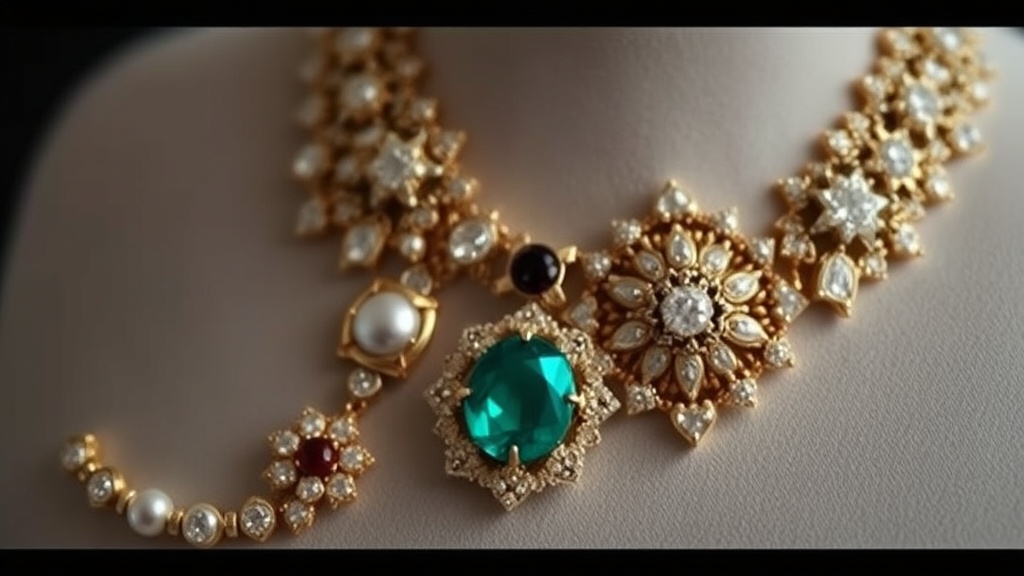
How to Identify and Value Authentic Vintage Costume Jewelry

Vintage costume jewelry offers a tangible piece of fashion history at a fraction of the cost of fine jewelry. This post covers how to spot authentic pieces, understand what drives their value, and avoid the flooded market of reproductions and mislabeled modern items. Whether you're building a collection, hunting for resale profit, or simply want to wear something with character, knowing the difference between a $10 trinket and a $300 signed brooch will save you money and frustration.
How can you tell if vintage costume jewelry is authentic?
Authentic vintage costume jewelry has specific construction traits, material signatures, and maker's marks that separate it from modern knockoffs. The catch? Reproductions have become startlingly good, so you’ll need to examine more than one feature before buying.
Start with the clasp and construction. Older pieces—particularly those from the 1920s through the 1950s—often use box clasps, hook-and-eye closures, or trombone clasps on necklaces. Earrings from the 1930s and 1940s typically have screw-backs (clip-ons came later), while pierced ears didn’t dominate until the 1970s. If a seller claims a brooch is “Art Deco” but it has a modern safety catch with a rolling mechanism, skepticism is warranted.
Next, inspect the back of the piece. Vintage manufacturers paid attention to finishing even where no one would look. Trifari, Coro, and Miriam Haskell pieces often have smooth, well-plated backs with neatly glued stones. Modern reproductions frequently show rough solder, visible glue blobs, or flimsy pin stems that wobble. (A quick test: if the pin stem feels loose after seventy years, it may have been replaced—or the piece was never old to begin with.)
Maker’s marks are your best friend. Here’s a structured list of common signatures and what they typically indicate:
| Mark | Era | Notes |
|---|---|---|
| Trifari (with crown symbol) | 1930s–1960s | High-quality plating, often rhinestone-focused. Crown mark phased out in the late 1960s. |
| Coro (or Corocraft) | 1920s–1970s | Corocraft denotes higher-end line. Duette clasps are a signature innovation. |
| Monet | 1930s–1990s | Known for clean metalwork and clip-back earrings. Often unsigned in early years. |
| Weiss | 1940s–1970s | Intricate rhinestone settings, often rivaling fine jewelry sparkle. |
| Sarah Coventry | 1950s–1980s | Sold through home parties. Pieces are collectible but generally less valuable than designer-signed. |
Worth noting: absence of a mark doesn’t always mean inauthentic. Early Chanel costume jewelry, for example, was frequently unsigned during the 1930s and 1940s. That said, an unsigned “Chanel” piece being sold at a steep premium demands extra provenance—receipts, original boxes, or documented auction history.
Finally, materials matter. Authentic vintage costume jewelry uses rhinestones (often Swarovski crystals in better pieces), glass stones, Lucite, Bakelite, enamel, and base metals with heavy plating. Modern fakes sometimes use lightweight acrylic, poorly cut resin, or thin electroplating that flakes within months. The Costume Jewelry Collectors International maintains excellent reference galleries for comparing authentic stones and settings across decades.
What makes some vintage costume jewelry valuable while other pieces are nearly worthless?
Value hinges on a combination of designer pedigree, rarity, condition, and current market demand—not just age. A broken 1920s piece with missing stones may sell for less than a pristine 1960s Trifari parure in its original box.
Designer names carry the most weight. Signed pieces by Chanel, Miriam Haskell, Eisenberg Originals, and Schiaparelli consistently command top dollar at auction. A 1950s Miriam Haskell floral brooch with layered glass pearls and intricate wirework can easily fetch $200–$400, while an unsigned but similar-looking piece might struggle to reach $30. Hollycraft pieces from the 1950s—often marked with the year—are also rising in popularity among collectors who appreciate their vivid enamel and dense stone placement.
Rarity and completeness affect price dramatically. Demi-parures (matching necklace and earrings) or full parures (necklace, earrings, bracelet, and brooch) are worth significantly more than individual pieces. That said, a single, iconic design—like an Eisenberg Original figural brooch—can outperform an entire generic set. Limited production runs, pieces made for specific Hollywood films, or jewelry created during short-lived collaborations (such as certain Trifari Crown Jewels replicas) add scarcity premiums.
Condition is where many hopeful sellers stumble. Here’s what dealers look for:
- Stones intact and original. Replacement stones—especially mismatched colors or modern acrylic substitutes—slash value.
- Plating intact. Heavy wear showing base metal (brass, copper, or pot metal) reduces desirability unless the piece is extremely rare.
- Clasps functional. A broken clasp on a necklace drops the price by 30–50%, sometimes more.
- No unpleasant odors. Vintage pieces that smell musty or perfumed can indicate moisture damage, mold, or poor storage.
Market demand fluctuates. Right now, bold 1980s statement earrings and layered gold-tone chains are trending among younger buyers, while mid-century rhinestone sets remain staples for formal collectors. The Heritage Auctions vintage jewelry department publishes realized prices that offer a realistic benchmark—eBay “buy it now” listings are often fantasy numbers.
Where should you buy and sell vintage costume jewelry?
The best sources depend on your budget, expertise, and patience. For buyers, estate sales and auctions in older neighborhoods often yield overlooked treasures at reasonable prices. In Edmonton, venues like the Old Strathcona Antique Mall and seasonal vintage markets around Whyte Avenue regularly stock signed costume jewelry. (Pro tip: arrive early on opening day, but don’t ignore the final hours—dealers sometimes drop prices rather than pack inventory back up.)
Online marketplaces expand selection but increase risk. Ruby Lane and Chairish cater to vetted sellers and tend to have higher prices but more accurate descriptions. eBay and Etsy offer bargains, though photography can hide flaws. Always request photos of the back, the clasp mechanism, and any marks before committing to a high-dollar purchase.
For sellers, consignment shops and specialized vintage dealers provide lower hassle but take 30–50% commission. Direct sales through Instagram, specialized Facebook groups, or your own website keep more profit in your pocket. If you have rare designer pieces, auction houses like Bonhams or Heritage Auctions may be worth the fees. Here’s the thing: a $50 Monet necklace sold on eBay might net you $35 after fees, while the same piece at a local vintage fair could sell for $45 with no shipping headaches.
Spotting reproductions: red flags to watch for
Reproductions aren’t inherently evil—unless they’re sold as vintage. Modern manufacturers in Asia produce convincing copies of Trifari, Chanel, and Dior costume jewelry. Common red flags include:
- Marks that look stamped with a modern laser rather than engraved or embossed.
- Perfect symmetry in hand-assembled pieces. (True vintage often has slight irregularities.)
- Colors that didn’t exist in the original era—neon enamels on “1920s” pieces, for instance.
- Magnetic metals. High-quality vintage costume jewelry is usually brass or pot metal with plating, neither of which is strongly magnetic.
- Prices that seem too good for the claimed designer and condition.
That said, not every unmarked piece is a fake, and not every signed piece is genuine. Forgers have copied marks for decades. If a deal feels rushed or the seller deflects questions about provenance, walk away. The vintage jewelry market isn’t going anywhere—there will always be another brooch.
“The best collectors aren’t the ones who find the rarest pieces. They’re the ones who know what they’re looking at before they hand over the money.”
Building knowledge takes time. Handle pieces in person when possible. Visit museum exhibitions. Talk to dealers at shows in Calgary, Vancouver, or Toronto. Over time, you’ll develop an eye for quality construction, authentic patina, and the subtle weight of a well-made clasp. Vintage costume jewelry rewards curiosity. Every piece has a story—you just need to learn how to read it.